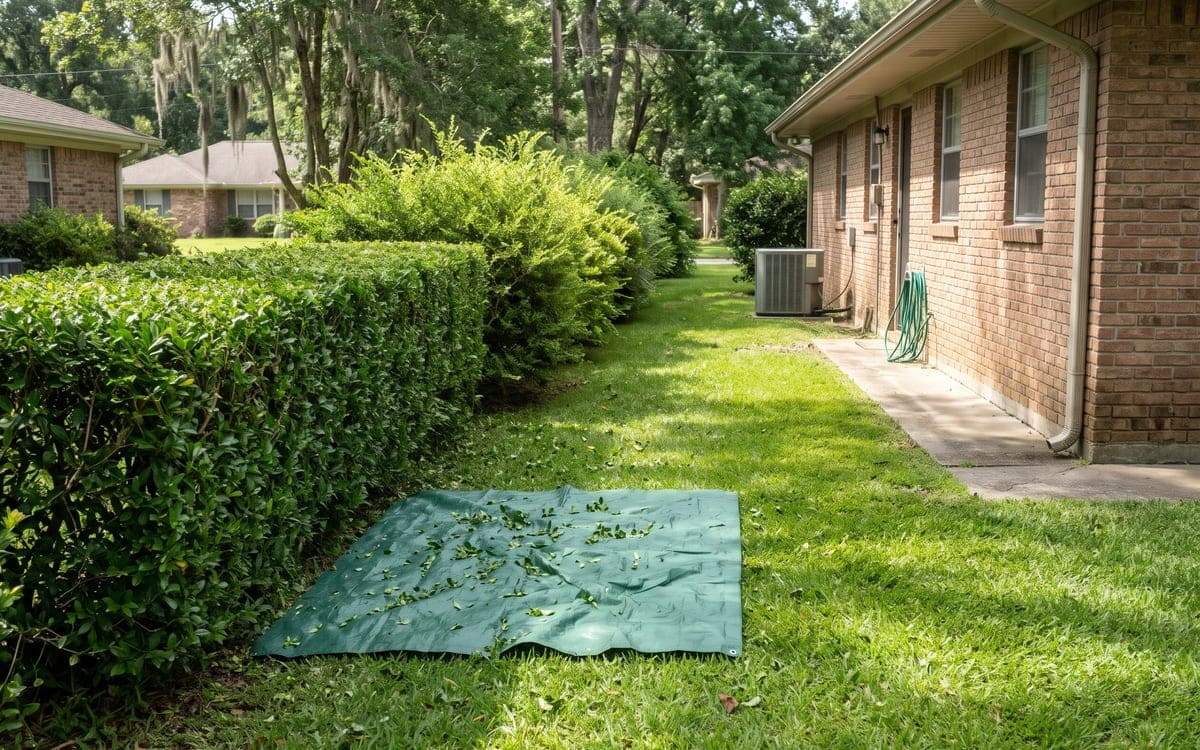
Trim counts fit the plant and the shape
What counts as well-kept is set by the plant and the shape the owner wants. A formal front hedge wants tighter outlines than a loose planting around the back patio.
How fast each hedge grows sets its interval
Not every hedge in a yard grows at the same pace. Fast-growing hedges push out new growth between trims and go shaggy quickly. Slow-growing ones put on modest growth and hold their shape between trims.
A yard with both will want them on different schedules. The ligustrum in the front might run on a different interval than the boxwood along the walk. Running the same calendar on both leaves one of them either neglected or over-trimmed. The visit is set to the plant.
Spring bloomers wait for the flowers
Some flowering hedges set their flower buds the previous year, which means a hard trim before the bloom cuts off that spring's flowers. Azaleas are a common example. The usual approach with spring-blooming shrubs is to trim after they bloom, not before.
A flowering shrub in a trim schedule might get skipped on a March visit and caught after its flowers fade. A trimming crew reading the shrubs sees that and skips it in the moment.
How a light-trim schedule reads on a Baton Rouge hedge
Across hedges, the pattern that holds is lighter and more frequent trimming beats a single annual reshape. A hedge trimmed on a schedule looks neat all year and does not have a long stretch of recovering from a deep cut. A hedge trimmed hard once a year looks okay for a stretch and ragged for most of the rest of the year.
The plant also handles light trims better. A trim that stays in the current year's growth takes almost no stress; a hard cut that goes back into older wood leaves the hedge working to re-grow leaves in the bare patches, where that is possible at all.
Through the dormant months, hedges rest
Through the dormant months, most hedges are not pushing new growth. A heavy trim in that stretch is rough on the plant, especially if a hard freeze follows soon after. Through the dormant stretch, a trim visit on a healthy hedge is uncommon.
The quiet stretch is also when a bigger project on an overgrown hedge sometimes starts. A project like that is a staged job rather than one hard cut.
Where our visit fits
A trim visit reads the hedges from what each one is doing today. Hedge and shrub trimming is the service; when to trim hedges covers timing within a Baton Rouge year, and boxwood trimming covers that specific hedge.
A weekly mowing visit happens more often than most hedges need. Weekly or every-other-week mowing handles the lawn.
A rough map by hedge type
The hedge in your yard sets the pace more than any table can.
| Hedge type | Examples | Typical rhythm |
|---|---|---|
| Fast, dense | Ligustrum, wax myrtle | Trims across the growing season |
| Medium, dense | Indian hawthorn, cleyera | Fewer trims across the growing season |
| Slow, formal | Boxwood | Light trims; see boxwood trimming |
| Spring-blooming | Azalea | A light shape after flowers fade |
| Low, informal | Loropetalum, dwarf yaupon | Light trims across the growing season |
A hedge that has been let go for a season will ask for more trims in the catch-up year than it will in the maintenance years that follow.