Before the first visit
Do I need to be home?
It depends on the yard. If the yard is easy to get into (no locked gates, no indoor dogs that need you to settle them, no side yard that needs an eye) you do not have to be there. If any of those are in play, or if you want to walk the yard with us before and after the work, it is better to be home. We settle it on the call.
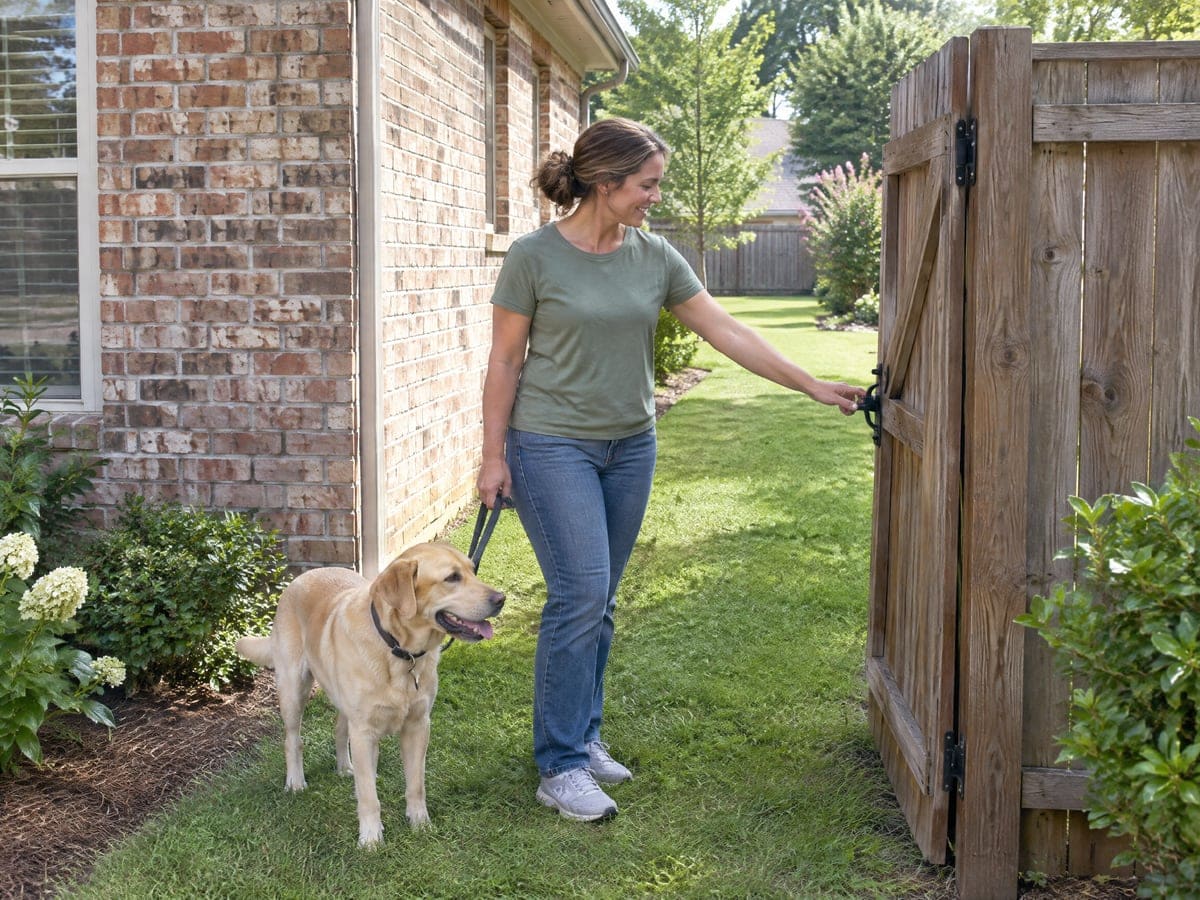
What about gates and dogs?
Tell us on the call what the setup is: whether a side gate is locked, whether a code opens it, whether a dog is kept out back during the day and whether that dog will be at the fence when we come up. We can work around most dogs if you tell us ahead of time; we do not want to meet one at the gate for the first time.
Should I pick anything up first?
A walk-through for toys, hoses, dog stakes and anything light enough to blow around is a help, but it is not required: our crew walks the yard before the mower starts for exactly these things. If the lawn is tall, pick up only what is in plain sight on open ground. Leave the tall grass itself to the crew's walk.
What should I tell you about the yard?
The jobs you want (mow, edge, trim, weed, hedges), how big the yard is in rough terms, what grass is in it if you know, how tall the grass is right now, gates, dogs and any slopes near a ditch. If hedges or shrubs also need work, note which plants (boxwood, ligustrum, azaleas, something else) so the right tool comes out. See hedges and shrubs trimmed back for how we work them.
Mowing in Baton Rouge
How short should my grass be cut?
Different grasses want different heights, and the height sits in a window. For the heights by grass and how we pick inside the window, see grass cutting at the right height.
How often should a Baton Rouge lawn be mowed?
During the active growing season, LSU AgCenter says Louisiana lawns are mowed about once a week, or three to four times a month. From November through February the grass is dormant and mowing is generally not needed. For a month-by-month plan, see how often to mow here.
Do you mow wet grass?
Not if we can help it. Wet grass tears instead of cutting cleanly, clumps on the deck, leaves windrows and ruts a yard with mower tires on a soft lawn. If the weather is close, we judge it on the day and move or hold the visit when it is better for the lawn.
What do you do with the clippings?
On a normal cut, small clippings can stay on the lawn when it is mowed at the right height and break down fast in the heat. On a heavy or wet cut, they clump and need to come off. How the crew's clippings leave the yard is settled on the call, and the curbside rule is a separate question below.
Edges, hedges and beds
What is the difference between edging and string trimming?
Edging is a vertical cut along a hard line (walk, drive, curb, bed) with a stick edger, in a narrow pass that drops the grass seam onto the concrete. String trimming is a horizontal cut with a line head where the mower deck will not fit: fence lines, around trees, at posts and at the mailbox. One sets the line; the other reaches what the deck missed. See edging and string trimming.
When should hedges be trimmed?
The window changes by plant: an azalea is trimmed right after bloom so next year's buds are not cut off, while a boxwood holds its shape with a light trim during the growing season. For the timing by shrub, see when hedges need it.
Do you pull weeds by hand?
Yes, in bed areas. Hand weeding means pulling the weed, roots and all, from the mulch or soil along a bed line that already exists. The weed comes out with its root in soft soil, so what pulls up stays up. See beds weeded by hand.
Do you spray for weeds?
No. We pull weeds by hand in beds.
Can you trim a hedge that is up against a window?
Yes, as long as the hedge can be reached with both feet on the ground. We trim with both hands on the trimmer at chest height or lower, with a tarp down along the base so clippings come up with the tarp afterward. See hedge and shrub trimming from the ground.
What about fire ant mounds in the yard?
We point mounds out on the walk and leave them alone. The mower works around them so a mound is not kicked up and so nobody on the crew steps in one. If you know where a mound is before the visit, mention it on the call and we flag it first.
Lawn care questions in Baton Rouge about cost
How is lawn care priced in Baton Rouge?
Price comes out of the yard itself: how big the lawn is, what grass is in it, how much edging and hedge work rides along with the mowing, whether a gate or a slope changes the equipment, and how often you want it done. A one-time cut on a tall lawn is priced on its own, and a schedule is priced for the pace. For the pieces that move the price up or down, see what goes into a lawn care price. For a schedule versus a one-off cut, a weekly or every-other-week schedule covers how that side of the price is set.
Is the first cut on a tall lawn priced differently?
Yes. The first cut on a lawn that has gotten away is more work than a routine cut: staged passes to bring the height down, more wear on the deck and the line, more clippings to deal with. A tall lawn can need a follow-up cut after the first visit to even things out. That first cut is priced for what it takes. See a lawn that got ahead of you.
Baton Rouge rules on yards
Can clippings go in the street?
How does yard waste pickup work?
City-Parish garbage service includes one weekly out-of-cart collection that covers bagged leaves and grass and yard and woody waste from the resident's own yard work. Under the same program, landscapers, arborists and tree companies are responsible for removing their own debris rather than putting it out with weekly pickup.
What happens with tall grass complaints?
The parish has a Tall Grass category in its 311 system, and complaints about overgrown grass or weeds go to 3-1-1. A complaint is the parish's business; the visit from us is the mowing.
What about a rental or a house that is sitting empty?
We work on rentals the same way we work on an owner-occupied yard. The person calling us can be the owner, the manager or a tenant looking after the yard, and the yard tells us what the visit needs. For a house that has been empty, see a lawn that got ahead of you for the first cut.
Talking to us about your yard
What happens when I call?
You tell us about the yard: the jobs you want, how big it is, how tall the grass is right now, gates, dogs and anything to leave alone. We get back to you with what the work would be and the price. Nothing starts without your go-ahead. For a short version of the same thing, the get in touch page lists what to have ready.
Can I leave my number instead of calling?
Yes. The callback form sits right under the phone number on every page. Leave your name and your number and a line about the yard, and we call back.
Call (225) 535-8165 when you are ready, or leave your number in the callback form under the number.