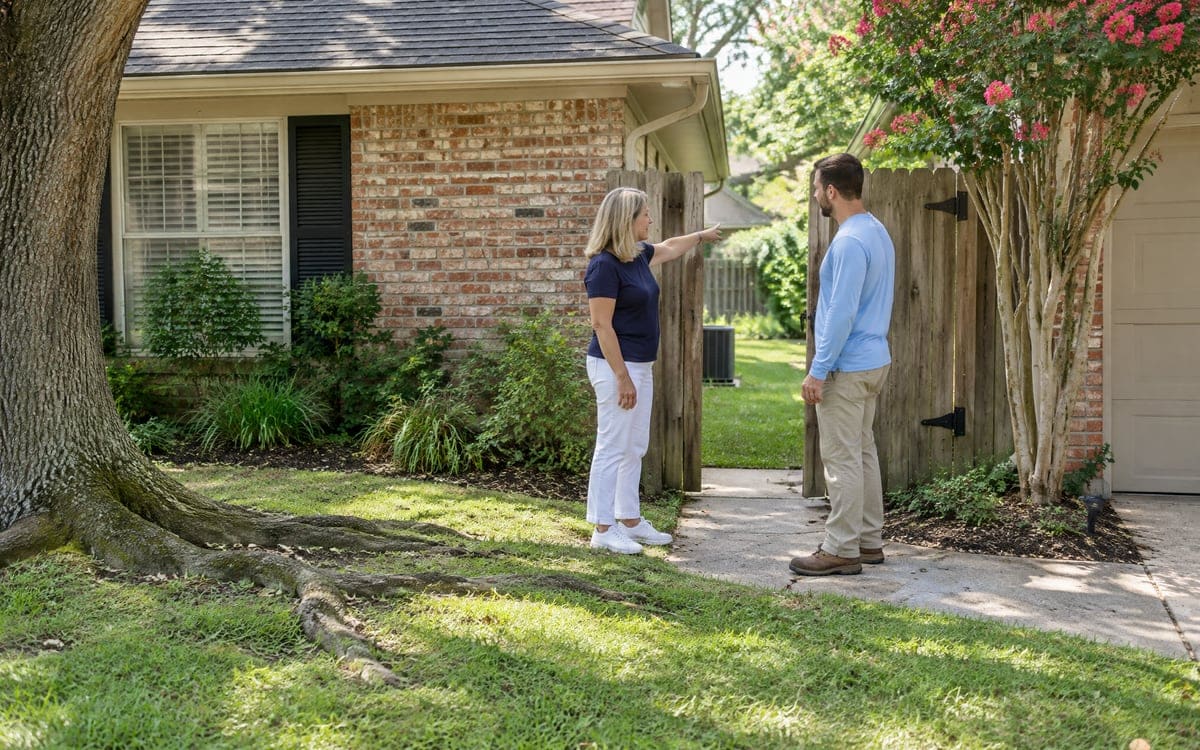
The yard sets the price
A mower, a trimmer and an edger have the same amount of work to do whether the house behind the yard is new or old, large or small. The yard itself is what changes. In Baton Rouge, single-family detached houses make up 58,401 of the city's 106,712 housing units, about 55 percent, and those are the yards most of this is about. Even inside that one category, the actual mowing area ranges from a small front strip and a fenced back to a wide corner lot with a long side yard and a hedge line between the drive and the neighbor.
What goes into a lawn care price
Each of these changes how much work a yard takes, which is why a price comes after a few questions about it.
The yard
- How much lawn there is in front, in back and along the sides.
- Gates, side yards and slopes that add steps.
- How tall the grass is on the first visit.
The work
- How often the cuts come.
- Edging and string trimming.
- Hedges and shrubs, and beds that need hand weeding.
Two numbers that look similar can hide a different amount of work. One quote might cover a tidy front and a small back, with the edges blown back onto the lawn. Another, for the same price, might include a side yard behind a locked gate, trimming around a fire pit and a swing set, and a bagger emptied twice. A price only settles after someone has looked at what is actually there.
If you want the shape of a visit before you call, grass cutting covers what we do on a routine mow, and a weekly schedule sets what a season of them looks like.
Gates, side yards and slopes add steps
Access shows up on the quote. A narrow gate limits which mower fits through. A locked gate on the day of a cut leaves the crew standing on the drive with the mower off. A long side yard adds lawn that a quick look from the street misses, and a slope near a drainage ditch is cut on foot and across the slope rather than up and down. All of that goes into the time the crew spends in the yard.
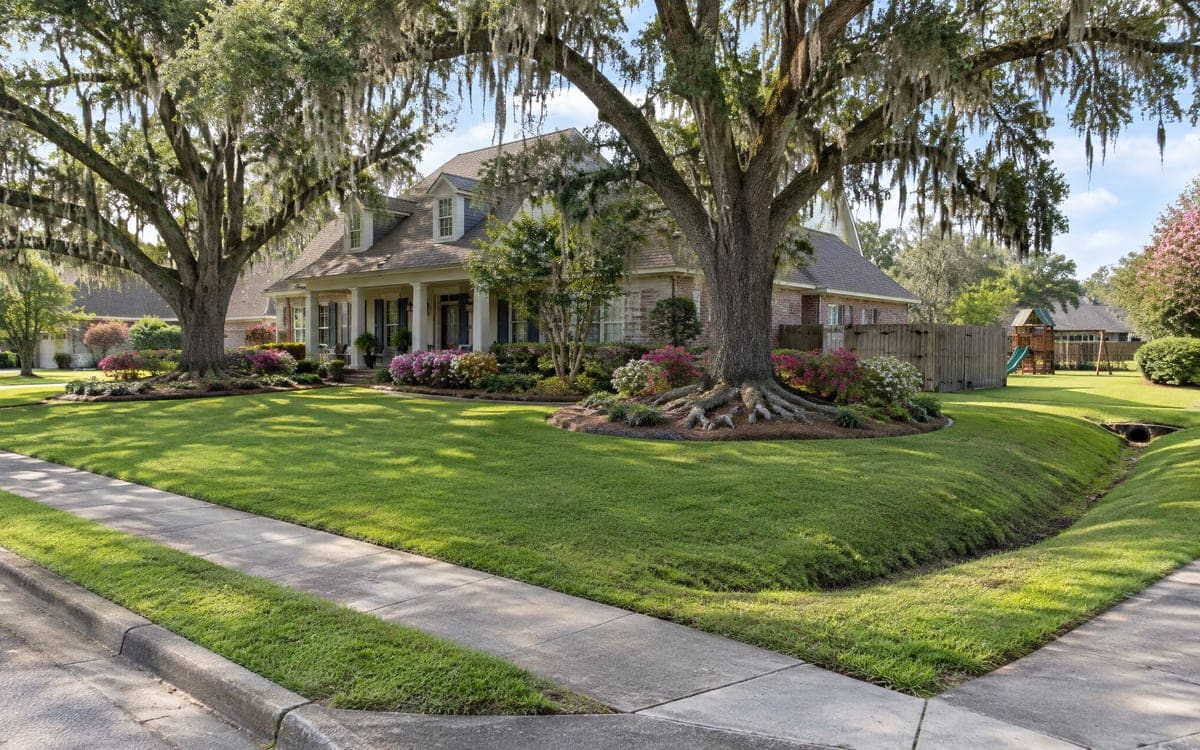
Trees and beds add work too. A lawn with half a dozen oak trees and a short bed in front means more string trimming at trunks and more edging along bed lines than a lawn with none. Edging and string trimming comes with most routine cuts, and can also be booked on its own when a yard needs the lines without the mow.
Grass height on the first visit matters most
Of all the things that move the price of a cut, the condition of the grass on the first visit is the biggest. A plain rule is to mow before the grass becomes one and one-half times as tall as the cutting height of your mower. A yard already well past the mower deck, with runners over the walk, is a different job. The first cut takes off more blade than a routine mow, the clippings pile up fast enough to clog a deck, and the lawn under the long growth is usually uneven.
The tall first cut is priced separately because the work is different. It comes down in more than one pass, with the deck brought down each time. If the lawn is well past the mower deck, the first cut on a tall lawn is where to start rather than a weekly setup.
How often we come changes each cut
A weekly schedule and a once-a-month cut on the same yard are not the same job. Regular mowing in the season runs about once a week, or three to four times a month, during the active growing season. On a weekly cycle in May through August each cut is light: the deck is set at the right height for the grass, the grass is close to the target before the mow, and the lawn stays in rhythm. On every other week in those same months, each cut takes off more blade, the clippings are heavier, and the lawn looks ragged sooner.
Louisiana's warm-season lawns grow faster and need to be mowed more frequently in the hot summer if moisture is adequate. When summer rain holds up its end, a weekly rhythm is simpler than every other week in June and July, because it keeps each cut small. How often to mow walks through the full year.
Edging, trimming and hedges are their own work
A mow covers the lawn. The clean lines along the walk and the drive, the trim around fence posts and mailboxes, and the shape of a hedge are separate tasks. On a routine visit the lawn work and the edging usually happen together, which is why they often read as included. They are still a share of the time on the yard.
Hedge trimming is where to go for the shrubs on their own. A hedge's time depends on how tall it has grown since the last visit, how long the run is, and whether it is one line or several. When hedges need it walks through the timing by shrub type. Hedges and the lawn are different work, and a quote that bundles them should name both.
Beds that need hand weeding are priced on what is in them
Flower beds along the house are a separate line on a quote. Hand weeding is what we do in those beds: pulling weeds out at the roots and bagging them. The time it takes depends on the size of the beds, the kind of weeds that have moved in, and how long since the beds were last cleared. A bed with a few scattered weeds in soft soil is one job. A bed thick with Virginia buttonweed and sedge after a rainy stretch is another, even if the bed is the same size.
A quote that lists mowing without naming the beds has not priced the beds. If weeding matters to you, say so on the first call.
Hourly figures leave out what a yard actually needs
An hourly number comparing two crews often leaves out most of what matters. One crew's hour on an open lot is not the same as another crew's hour on a shaded corner lot full of bed edges and fence posts. Hourly rates also leave out whether edging, string trimming, hedges and clippings are inside the hour or on top of it, which is where most of the real difference ends up.
What a homeowner usually wants to know is what the visit will do and what sits inside it.
A low quote deserves one more question
If a quote comes in well under the others, two questions usually turn up the reason. First: does the price include the whole yard, with gates, side yards and the back? Second: does it include edging, string trimming and the clippings? A visit that leaves half the yard uncut, or edges nothing, or sweeps the clippings into the gutter leaves work undone that will show up later.
A reasonable gap between quotes is normal. A gap bigger than that usually means something the quote did not include will come up later as an extra, or something that should have been done is going to be skipped.
What to tell us so the price fits the yard
The most useful call tells us enough to picture the yard: the front, the back and any side yards; whether the gates lock and whether the dogs can be kept inside while the yard is cut; the grass type if you know it, with a rough sense of how tall the lawn is right now; and any hedges or beds you want handled. A yard described in those terms gets a price that fits what you actually want, rather than a number that gets walked back later.
| What changes the price | Why it changes the work | What to tell us on the call |
|---|---|---|
| Yard size | More square footage to cut, trim and edge | Front, back, side yards, roughly in your words |
| Access | Gates, locks and narrow passes change the mower | Any gates, locks, codes, side-yard width |
| Grass height on day one | A tall lawn is its own cut | Where the grass is right now, roughly |
| Visit frequency | Weekly, every other week or monthly | What rhythm you want from spring to fall |
| Extras in the yard | Edging, trimming, hedges, bed weeding | Which of those you want included |