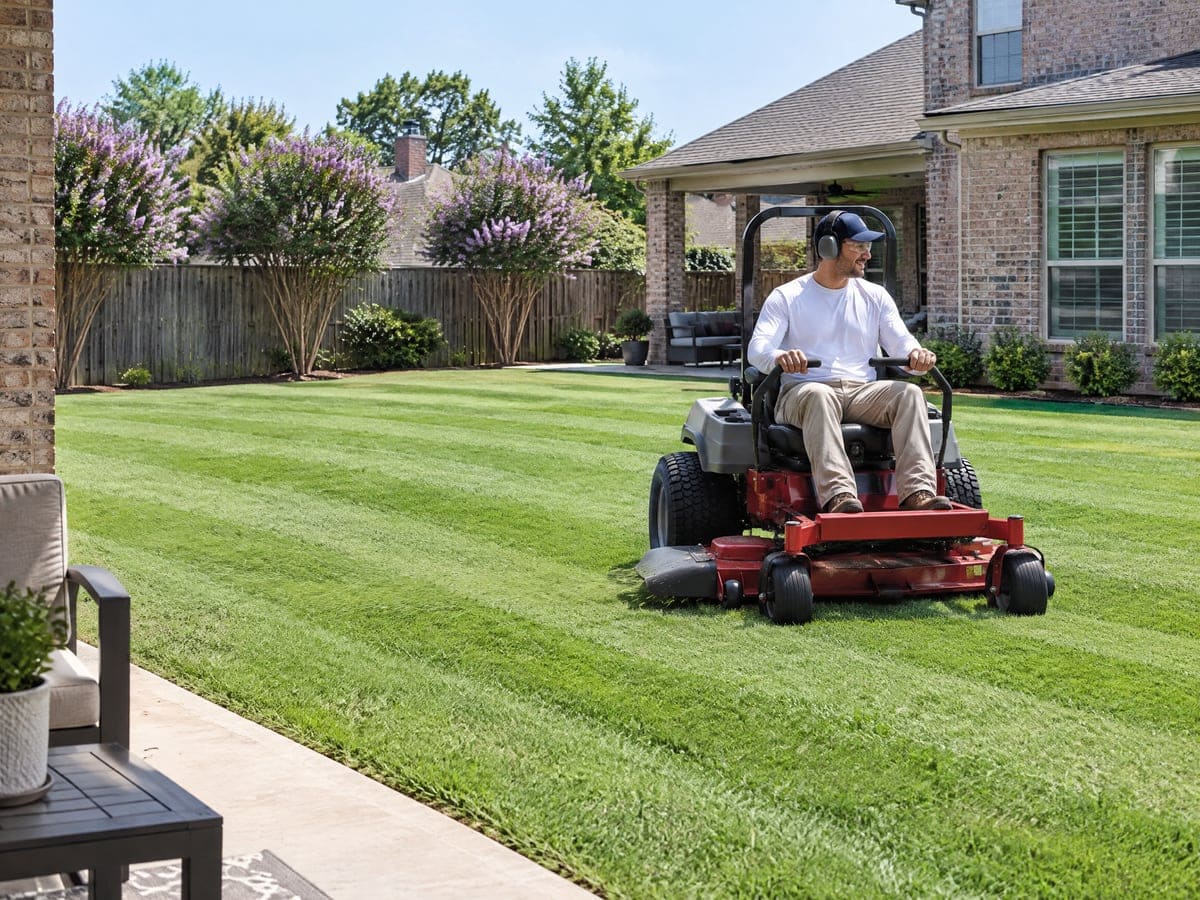
What a weekly lawn service season looks like
Baton Rouge gets a long growing season, a 276-day median freeze-free stretch at the airport. The crew's year starts before spring does and holds through the first cold nights.
1. The first spring cut after green-up
Lawns in south Louisiana can start greening up in late February. The first visit of the year is a slow one. We walk the yard first for sticks and debris that collected over winter, then set the deck to the range for your grass.
2. Weekly cuts through spring and summer
Louisiana lawns in active growth get about one cut a week, or three to four times a month. From the April flush through a hot August, that is the pace. Fast growers like Bermuda may need mowing more often than slow growers like zoysia. The visit moves with the weather, and you hear from us when it does.
3. Edging and trimming at every cut
Every visit covers the cut and the finish. The lines against the walk and the drive, the fences and the mailbox, the base of each tree. For a yard where only the finish has gone soft and the cut is handled, edging on its own can also run as a visit.
4. Hedges and beds when they are due
Hedges and beds are not weekly jobs. A boxwood row may take a trim a few times a year; azaleas get a light shape after the spring bloom. We can add hedge trimming to the visit when the row is due, and beds weeded by hand at the beat the beds need.
5. A slower fall, with the height still held
Fall growth is light but not nothing. LSU AgCenter says that fall lawns still need regular mowing to maintain proper height, with sharp mower blades, even on a longer gap between visits. Weekly or every other week carries most yards into November on the same height.
6. The dormant months
Most warm-season lawns in Louisiana are completely or partly dormant by mid to late November or December, and mowing while turfgrass is dormant is generally not necessary. St. Augustine may stay partly green in a mild south Louisiana winter. We take visits off the calendar during dormancy and pick them back up at green-up, so the schedule stops when the lawn stops needing it. Edges still hold their line because the grass is not fighting them.
| Stretch of the year | What the grass is doing | What the schedule usually looks like |
|---|---|---|
| Late February to March | Green-up starts; first visits set the height | A first cut, then into a regular rhythm |
| April through June | Spring growth and warm nights | Weekly cuts, every edge touched |
| July and August | Summer heat; fast growers push | Weekly or close to it; shaded yards may stretch |
| September and October | Growth slowing but still active | Regular cuts, blade stays sharp |
| Early November | The last stretch before the first freeze | Regular cuts hold the height |
| December through February | Dormant for most warm-season lawns | Mowing is generally not necessary |
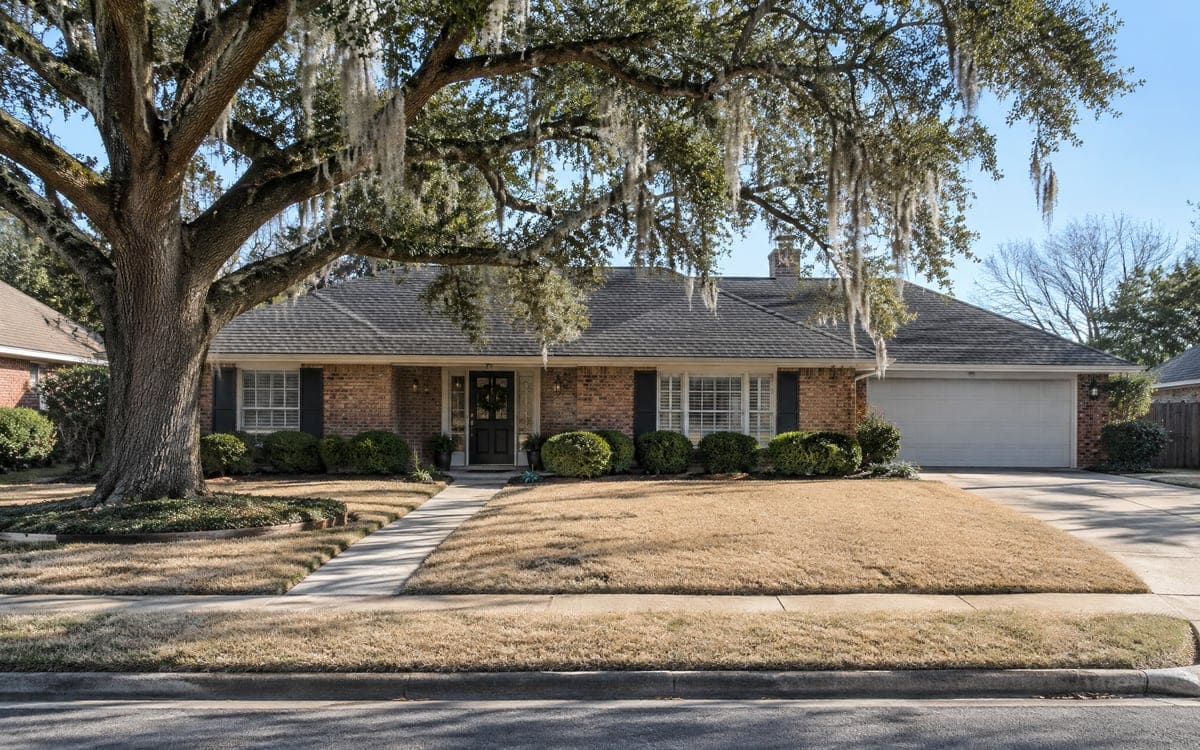
Weekly, every other week, or something else
Weekly is the common shape. Every other week fits some yards, and in the slow months the gap stretches.
When a weekly schedule is the right fit
- You want the yard kept through the year without thinking about it.
- You want edges and trimming done at every cut, instead of waiting for them to look rough.
- You travel and want the lawn held while you are gone.
- You rent out the house and want a regular visit set up with the tenant.
When another service fits better
- You want one cut now and will decide later about the next; a single cut is a visit on its own.
- The lawn has already run away from the mower; a first cut on a tall lawn comes before a schedule starts.
- You only need the finish, not the cut, right now; the edging service covers that visit alone.
How often is your call. Faster for a fast-growing lawn like Bermuda or a sunny yard in full growth; slower for a shaded yard with fewer hours of sun or in the slow months. We set the pace with you and change it when the season does.