How a tall lawn gets cut back down
The first job on a tall lawn is finding what is in it.
1. A slow walk of the whole yard
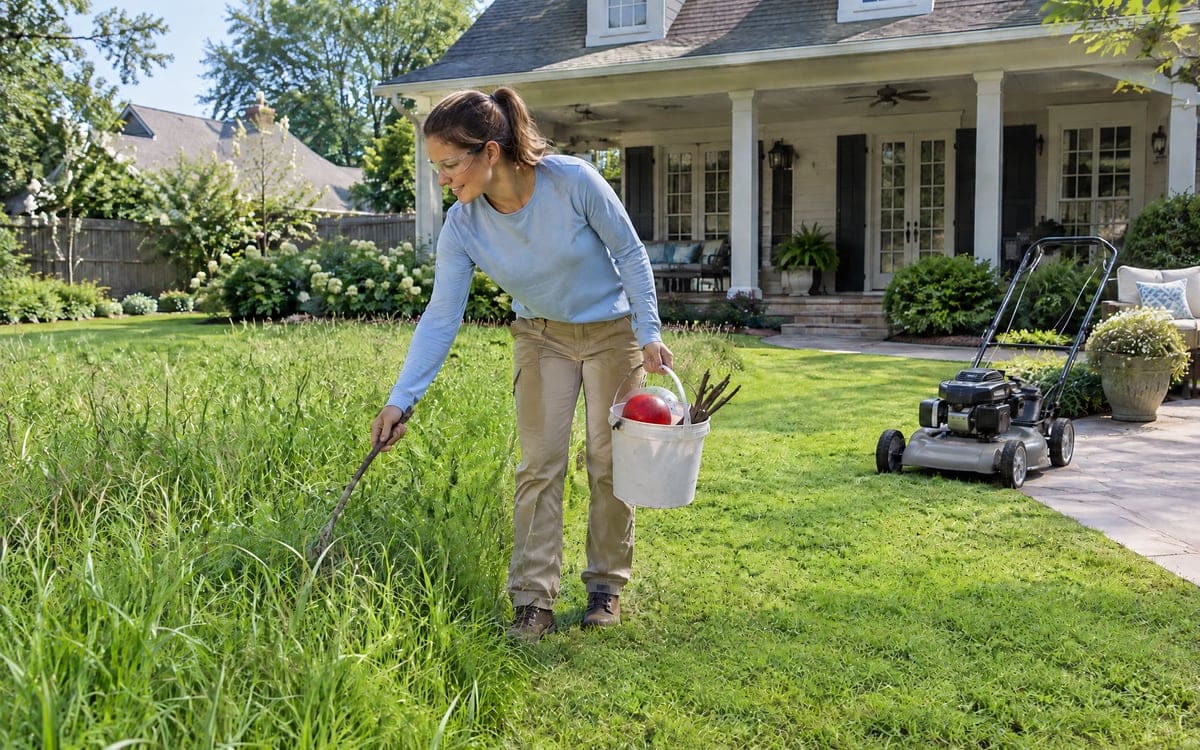
Before any machine starts, we walk the front, back and side yards. Sticks, toys, a hose coiled under the grass, a dog stake, a sprinkler head out of a bed, fire ant mounds along the fence. Snakes near tall grass or a brush pile are given room; nobody handles them. A ball or a bucket at the edge of the yard looks like the yard until the mower hits it.
We pick up what the mower would hit, and point out anything more before the first pass.
2. A first pass with the deck raised
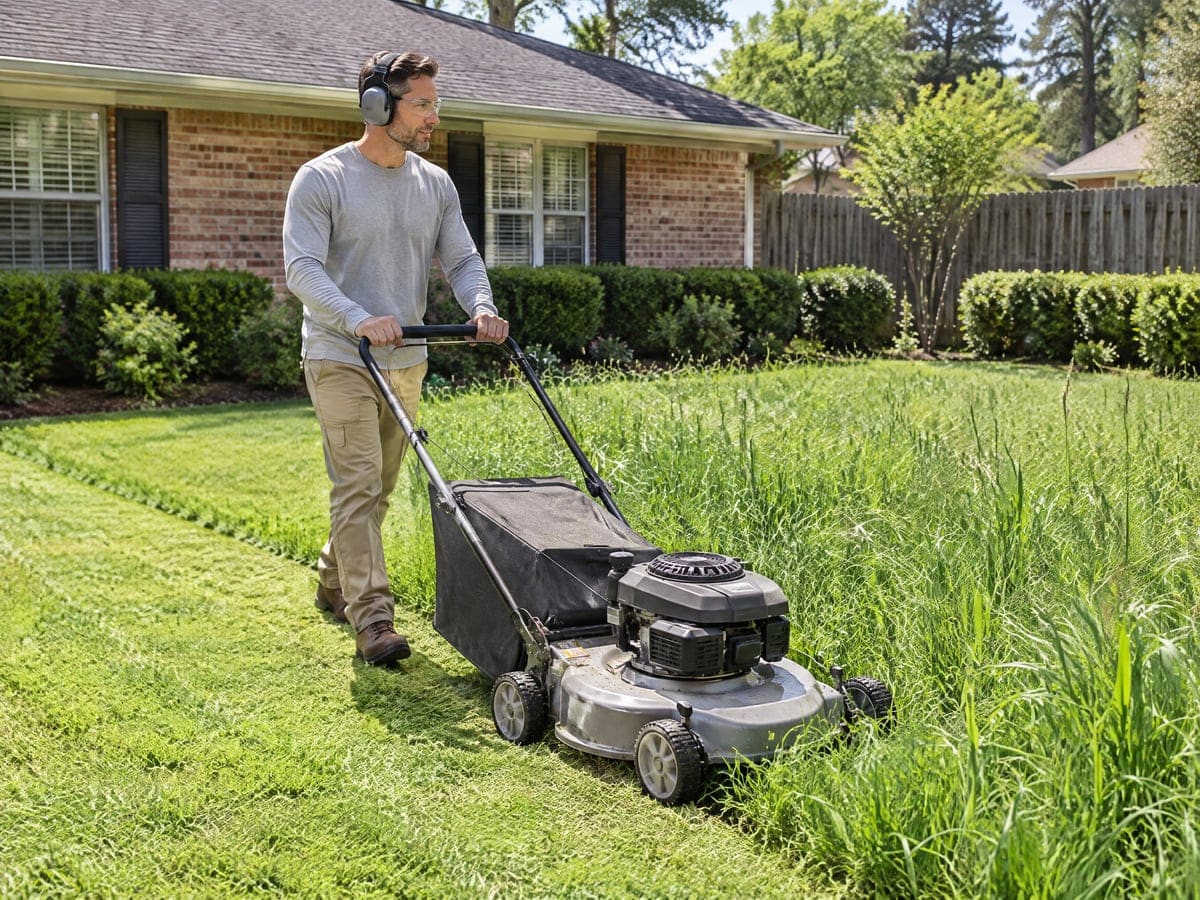
The first pass sits high. The one-and-a-half rule says to mow before the grass reaches one and a half times the cutting height of your mower, and letting it grow too tall between cuts leads to thin, weedy turf. On a tall lawn, dropping all the way to normal height in one pass takes too much green at once, so the deck comes down over more than one pass instead.
3. A second pass lower
After the first pass, the lawn is still taller than it will finish. A second pass brings the height into the range for your grass, often with a cross pattern so the lawn looks even from both sides. On a very tall lawn, a third pass may be needed; the goal is to spare the grass that is still green down low.
4. Clippings bagged
A tall first cut leaves heavy clumps on the lawn, which is why clippings get removed when they form clumps, as they do if you allow the grass to grow too high between mowings or if you mow wet grass. Bagged clippings leave the lawn so the grass under them can see light again. Nothing is swept into the gutter or the street.
5. Edges and fence lines trimmed back
The cut leaves ragged lines around the yard. The crew runs the edger along the walk, the drive and the curb, and finishes edges and fence lines with the string trimmer. If the shrubs have grown with the grass, shrubs that grew with it can be added.
6. A last look and the next conversation
When the yard is down, we walk it with you if you are home. Two things come up here: what the lawn looks like now, and what to do so it does not get this tall again. A normal cut on the next visit, or a schedule, or a one-time reset, we go over on the spot.
| What the yard looks like | What the first visit usually involves | What comes next |
|---|---|---|
| Grass a few inches over the deck line | Raised deck first pass, lower second pass, bagged | A normal cut on the next visit |
| A full growing season left alone | Slow walk for debris; passes may take longer | A weekly or every-other-week schedule from here |
| A rental yard between tenants | Walk for toys, a stake left behind; two passes, bagged | A schedule set up with the landlord or the new tenant |
| A yard that sat empty while the house was for sale | Walked first for anything hidden in the grass | A one-time reset or a schedule |
| Sticks and debris under the grass | Debris in a bucket before the first pass; two passes with the deck | A regular cut once the lawn is back to a normal height |
A summer lawn that has run away comes down gradually across more than one pass, not in a single hard cut.
When the overgrown service is the right fit
- Grass is past the mower deck, visibly tall from the sidewalk.
- A rental has turned over and the yard has gone for weeks without a cut.
- An inherited or estate property has been sitting with the lawn untouched.
- A long trip has passed and the lawn ran ahead of the normal mower.
When another service fits better
- The lawn is tall but not past the deck. A normal cut is the right visit; we may raise the deck a touch and bag.
- The yard needs the finish only, so the edging service covers that visit on its own.
- You want this handled from here on. A weekly or every-other-week schedule can follow the first cut.
On the call we ask how tall the grass is now, how long it has been since the last cut, and whether a dog or a child is normally in the yard. The answers tell us what the first cut involves.