Baton Rouge edging and trimming

Lawn edging and string trimming in Baton Rouge

Lawn edging in Baton Rouge, with the string trimming that finishes where the mower cannot reach, is its own visit: one clean vertical cut along the walk, the drive and the curb, and fence lines where grass has tried to spread. On its own, or with the cut itself, it is what makes a mowed lawn look done from the sidewalk.

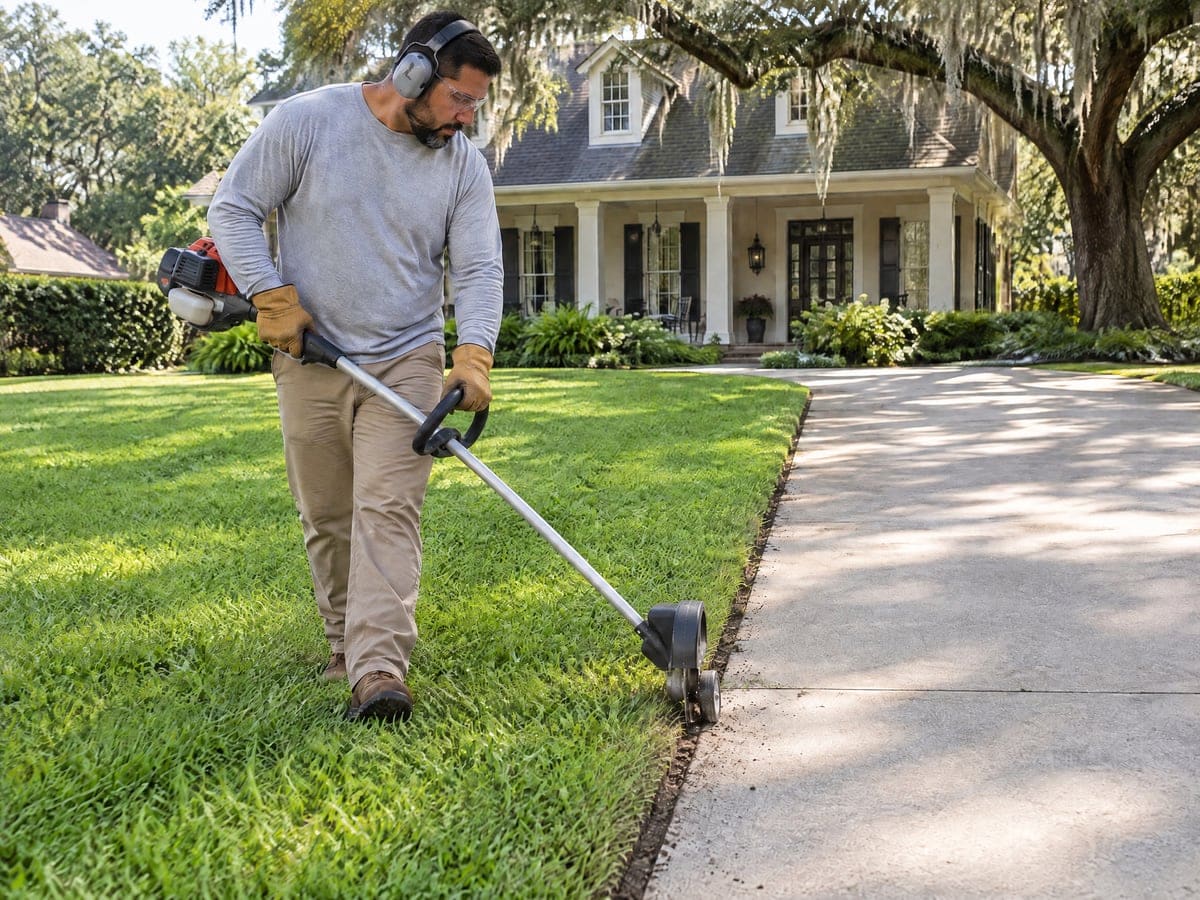
A worker in ear defenders runs a wheeled lawn edging tool along the concrete driveway edge of a white Acadian style house, cutting a clean line where the grass meets the slab.

Where the mower stops, edging starts

1. A look at where grass has crept

We walk the walks, the driveway and the curb first, with the beds on the way. St. Augustine runners cross concrete fast when it is warm, and warm-season grass grows faster and needs mowing more often in the hot summer when there is enough moisture. What has crept gets edged. Where grass has run into a bed, the edger stops at the bed line and the grass inside stays until a weeding visit handles it.

2. Edging the concrete seams

A stick edger drops one straight, narrow, vertical cut where grass has grown over the slab, along the walks, the drive and the curb. The blade follows the seam between lawn and concrete so the line stays where it belongs year over year. On a first visit, a lawn that has not had an edge for a few seasons leaves a shelf of soil along the slab; that soil comes up with the cut, and the next time out the edge is a shallow trim. The crew works at a steady walking pace and flags any sprinkler head at the edge first.

3. Along existing beds

For beds that are already there, the edger follows the line that is already cut. If beds inside the yard need weeding under the shrubs, we price weeding the beds we edge along at the same look.

4. String trimming where the mower cannot reach

The line finishes the places a mower deck cannot work: fences, posts, the mailbox, around trees and under a gate. A trimmer and an edger look alike but handle different parts of the lawn.

Edging and string trimming do different jobs

Edging cuts a line where grass meets concrete or a bed. A trimmer takes down the grass a mower cannot reach.

Edging

  • One straight, narrow, vertical cut where grass meets the walk, the drive or the curb.
  • Along an existing bed, it follows the line already there.

String trimming

  • Grass along fences and posts, around the mailbox and around trees, cut down to match the lawn.
  • The line is kept off trunks, siding, windows and cars.

The line stays a few inches off tree trunks, siding, windows and cars.

5. Clippings back on the lawn

Clippings go back onto the lawn, never into the gutter or the street. If you have hedges and shrubs that should be done at the same visit, we add them.

6. A last look along every edge

We walk every line one more time with the trimmer and the edger off. If a spot still looks softer in the shade, that gets a second pass before we go. Anything the edger threw onto the drive or the walk gets blown back onto the lawn.

Edging and trimming each tend to land in a few familiar places:

Spot Edged or trimmed What it leaves
Along a concrete walk Edged A sharp vertical line between grass and the slab
The driveway seam Edged No grass creep over the drive
The curb at the street Edged A clean line against the gutter
Along a flower bed Edged along the existing bed line The bed line that is already there, cleaned up
Fences, posts and the mailbox String trimmed Grass at matching height, nothing against the post
Around trees Trimmed with line kept off the bark Short grass at the base, trunk left alone
Under a gate String trimmed An even sweep where the gate opens

When edging and trimming stand on their own, and when a different service fits

Edging and trimming are a visit of their own when the lawn is mowed but the lines have gone soft. Most yards have them done at the same visit as the cut.

When edging on its own fits

  • The lawn is mowed but every edge looks fuzzy.
  • You mow yourself and want a crew for the finish only.
  • A reset after the winter, or at green-up.
  • You want the concrete seams reopened after a long time without an edge.

When another service fits better

  • A yard being kept through the year wants edges kept on a schedule, with the cut done at the same visit.
  • A lawn past the mower deck needs a first cut on its own before the lines show.
  • Weeds thick inside the beds are their own job, not an edge job.

On the call we ask what the lawn looks like, how long it has been since the last edge and whether you want the cut too. If the walk and the drive are hidden under grass, we start there.
The visit, from the call to a last walk along every line

  1. The call. You tell us the yard, the walks, drives and beds, whether a dog will be out, and whether you want the mowing too.
  2. The look at the yard. In person if you are home, or from what you tell us plus a check on arrival. We flag any sprinkler head or shallow line at the edge so a stick edger does not meet it.
  3. The price and the go-ahead. The price is for the yard that is actually there, not for a figure named over the phone.
  4. The work and a last look. The edges and trimming done, clippings off the hard surfaces, then a walk together along every line.

For how a schedule changes the picture, the mowing calendar runs through the year month by month. For what sets any price, what moves the price covers the pieces.

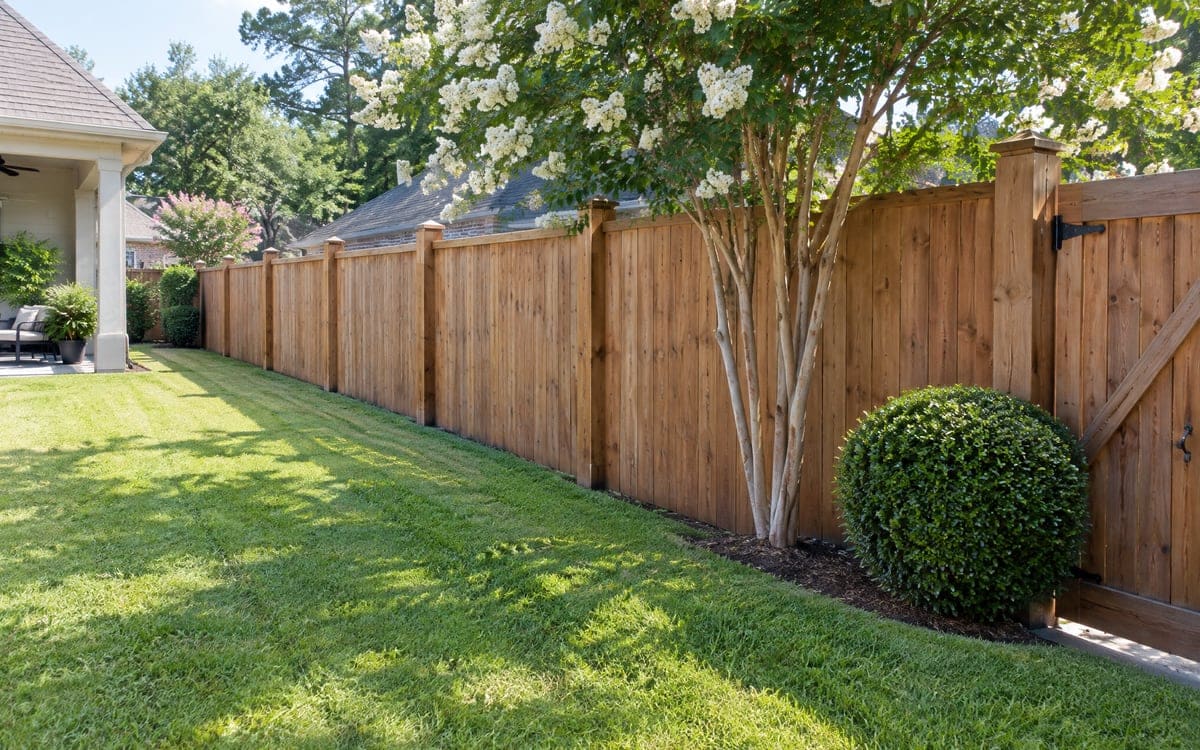
A tall wood privacy fence runs the length of a back lawn, with the grass trimmed flush along its base and a white crape myrtle in bloom at the far end by the gate.

Storm drains, concrete and the Baton Rouge rain

Water that goes down a storm drain here is not treated at a wastewater plant; it flows straight to streams, rivers and lakes, and sweeping grass and tree clippings into a storm drain or onto the street can cause street-level flooding by clogging the drain. That is why clippings stay on the lawn.

With rain running about 114 days a year, and 19 of them an inch or more, anything loose on a hard surface heads for the nearest drain. Parish code counts yard clippings and leaves as litter and bans sweeping that litter from a lot, sidewalk or driveway into a gutter or street. Whatever the edger throws onto the drive goes back onto the lawn before we leave.

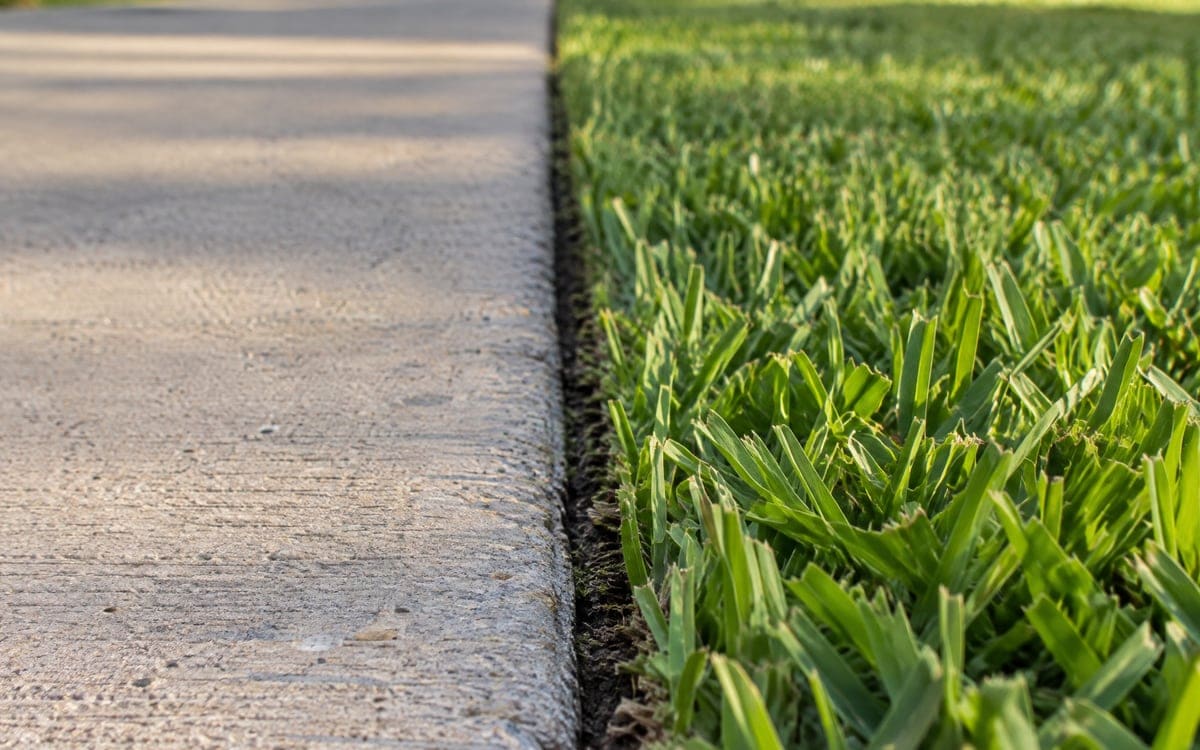
A sharp close-up of a concrete walk meeting a St. Augustine lawn, a thin dark line between the slab and the first green blades after a fresh edging pass.

Lawn edging in Baton Rouge: your questions

What is the difference between edging and string trimming?

Edging is one vertical cut along a hard line: the walk, the drive, the curb, the line of an existing bed. A string trimmer handles the grass a mower cannot reach: along fences, around posts, at the mailbox, around trees, under a gate. Most yards need both at every visit.

Do you edge along flower beds?

Yes. Along existing beds, the edger follows the line that is already there.

Will a trimmer hurt my trees?

Only if the line is run against the bark. On a mature live oak, the crew finishes the short grass at the base with the line kept a few inches off the trunk and laid flat. On a thin-barked tree, a close trimmer line scars the trunk, so we keep extra room.

How often should edges be cut?

Edges follow the cut. In the growing season a walk that gets a weekly cut gets a weekly edge touch; for a yard on every-other-week the edge still looks right most of the week. In the slow months the edge holds for a long stretch between cuts. For the full year, see the Baton Rouge mowing schedule.

Where do the clippings go?

Back onto the lawn, never toward a storm drain or the street.

Can I get edging without mowing?

Yes. If you cut your own lawn and want the finish done, that is the visit. We ask on the call how long since the last edge so we know whether the first visit is heavier than later ones.

How is edging priced?

A few things set it: how much walk and drive are in the yard, how long it has been since the last edge, whether a seam is buried under a soil shelf, and whether beds and trimming are part of the day. We land on a price for the yard that is actually there.

Call (225) 535-8165 to walk through the edges with us: what the walk, the drive and the curb look like, how long since the last edge, and whether you want the cut on the same visit. A note in the form under the number is another way to get the same conversation going.

Ready for a freshly cut lawn?

Describe your yard to someone who mows, edges and trims for a living.

Call (225) 535-8165 Browse all services

Rather we call you?

Leave your name and number and we will call you back.

We use your number only to call you back. Privacy policy