Baton Rouge hedge and shrub trimming

Hedge trimming in Baton Rouge for hedges and shrubs

The ligustrum has grown over the windows and the row has gotten away from hand shears. Hedge trimming in Baton Rouge handles it as long as the whole plant can be reached from the ground, and that covers most of what people around here call shrubs: boxwood, ligustrum, azaleas, hollies and Indian hawthorn.

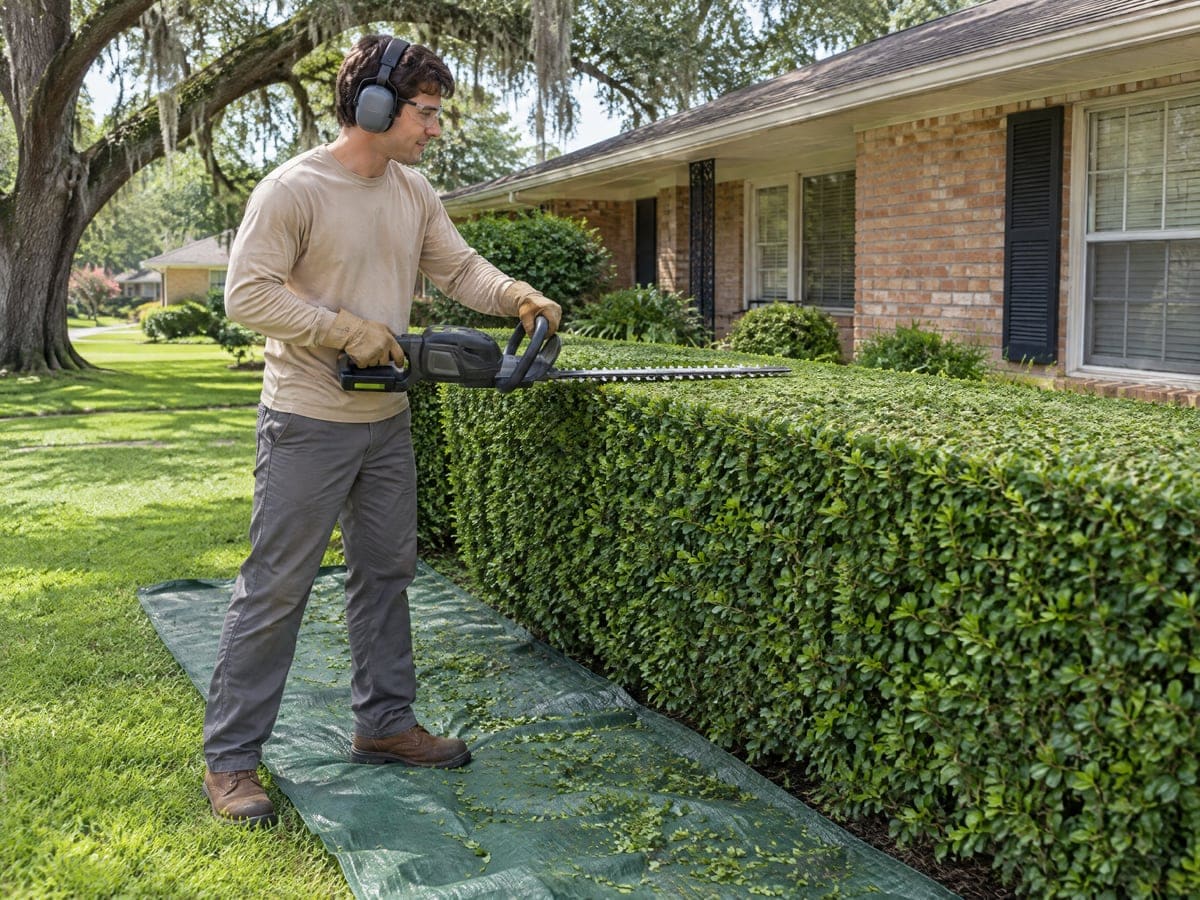
A worker in safety glasses and ear defenders runs a hedge trimmer along the top of a long boxwood hedge, with a green tarp on the ground to catch the clippings and a brick ranch behind.

How a hedge gets trimmed back into shape

The visit is slower than it looks, because the final shape depends on what the crew leaves on the branches. We take off a little at a time.

1. A look at the hedge with you

We walk the row with you. Height you want, windows and walks to clear, blooms you want to wait for, bare spots to hide, a top that looks straight from the sidewalk. If the row is on a slope, that comes in here too. We note what we would take and show you the line on the hedge itself before anything runs.

2. A tarp down along the base

Before any blade starts, a tarp goes along the base. Clippings land on the tarp, not in the bed. Mulch, groundcover and the bed stay where they are. On a hedge against the house, the tarp also keeps clippings off the siding and the window sills.

3. Trimming from the ground

The trimmer or the shears stay in both hands, at chest height or lower. The crew moves along the row at a steady pace, the shape coming off in short strokes. Hedge work never leaves the ground, so no ladders and nothing near a power line.

A plant taller than the crew can reach with both hands on a trimmer at chest height is past hedge work. We say so when you describe the row rather than start on it.

4. Wider at the base than the top

A hedge trimmed flat on the sides, with the top wider than the bottom, loses the lower leaves over time. We taper it, keeping the base a touch wider than the crown so light still reaches the lower branches. For an older boxwood or ligustrum that has already gone bare at the bottom, we leave it a little taller on this visit and let the base come in over later cuts.

5. Flat tops or natural shapes

What the top looks like is your call. A flat, formal cut looks crisp from the sidewalk; a natural shape softens the row and asks less often for a trim. Azaleas and Indian hawthorn tend to look right in a natural shape; boxwood and ligustrum take either.

6. Clippings off the tarp

Clippings come off the tarp into bags or bundles, depending on how thick the trim pieces are. We settle how the bags and bundles leave when we price the job.

7. A last look with you

We walk the row one more time before packing out, you with us if you are home. A corner that still looks soft gets a second pass with the shears before we go. If the lawn is up next, grass cutting while we are there is the easier add; the edges and beds pick up where the hedge stops.

Shrub How it is usually kept When we wait
Boxwood Formal, flat or domed, kept short Severe heat; a few days of wait is safer than cutting at midday
Ligustrum Short formal rows or taller screens, several light trims a year Flowering, if you want the berries to follow
Azalea Light natural shape after the spring flowers fade Before new buds set for next year
Holly Natural or formal; new growth hardens before a shaping cut If you want the berries that follow the bloom
Indian hawthorn Light shaping after the spring bloom While the plant is flowering
Yaupon or dwarf hedge Light growing-season trims, more often than larger shrubs Severe heat or a wet day

For a hedge-by-hedge calendar, when to trim each shrub runs through the Baton Rouge year.

Hedges and shrubs the crew can reach from the ground

Rows along a walk or under a window and single shrubs in the beds are all hedge work.

When hedge trimming is the right job

  • A row of boxwood, ligustrum, azalea or similar shrubs that can be reached from the ground.
  • A single shrub out of shape, under a window or along a walk.
  • A long row that has outgrown the shape it used to hold.
  • A hedge that is losing the bottom and needs to be set up to come back.

When another service fits better

Height off the ground, trunk thickness and how close the plant is to a wire usually settle which visit the yard needs.
The visit, start to finish

  1. The call. You tell us the row, how tall and how wide you want it, whether you want flowers kept for a season, and whether a dog will be out while we work.
  2. The look at the row. In person if you are home, or from what you tell us plus a check on arrival. We show the proposed line on the shrub itself.
  3. The price and the go-ahead. We give a price for the row that is actually there, not a figure quoted off a photo on the phone. For how a hedge changes the total, what a hedge adds to a price covers the pieces.
  4. The work and a last look. Tarp down, trim, clippings off, then a walk together along the row.
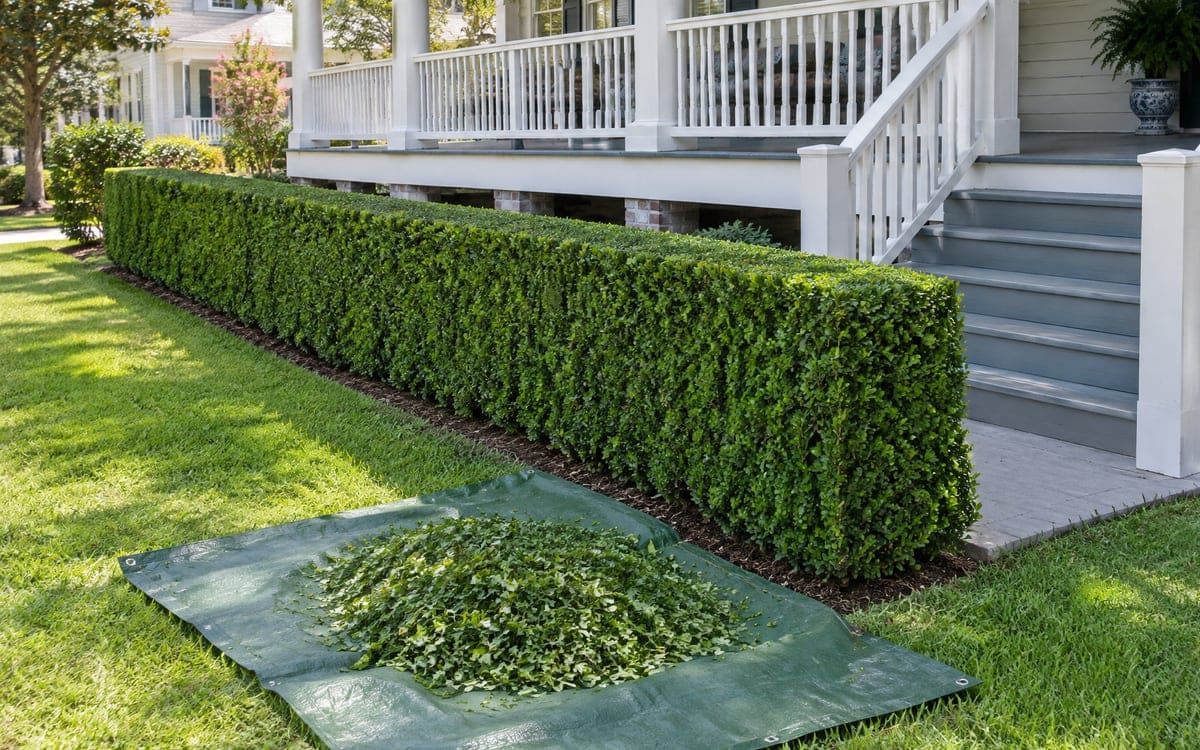
A row of boxwoods trimmed into a long low hedge in front of a raised white porch, with a mound of fresh clippings piled on a green tarp on the lawn.

Where the clippings go in Baton Rouge

The City-Parish states that landscapers, arborists and other tree maintenance or removal companies are responsible for removing their own debris.

How the crew's trimmings leave is settled when the job is priced. Nothing from a trim goes to the drain or into the street.

For a resident setting out their own hedge waste, leaves and lawn trimmings go in bags, and brush and branches go in bundles, with each kind in its own pile; no branch longer than 5 feet, thicker than 6 inches or heavier than 40 pounds, and parish code sets the same limits: 40 pounds a bag or bundle, 10 yard waste items per collection, and no stumps, trunks or limbs over 6 inches thick.

How curbside pickup takes yard waste

City-Parish crews take at most 10 items a collection day from what residents set out. Hired crews remove their own debris, the City-Parish says.

Bags

  • Leaves and lawn trimmings go in bags.
  • Bags sit in a pile of their own, apart from bundles.

Bundles

  • Brush and branches go in bundles.
  • No piece longer than 5 feet or thicker than 6 inches, and no item over 40 pounds.

Source: City of Baton Rouge and Parish of East Baton Rouge, Garbage Collection.

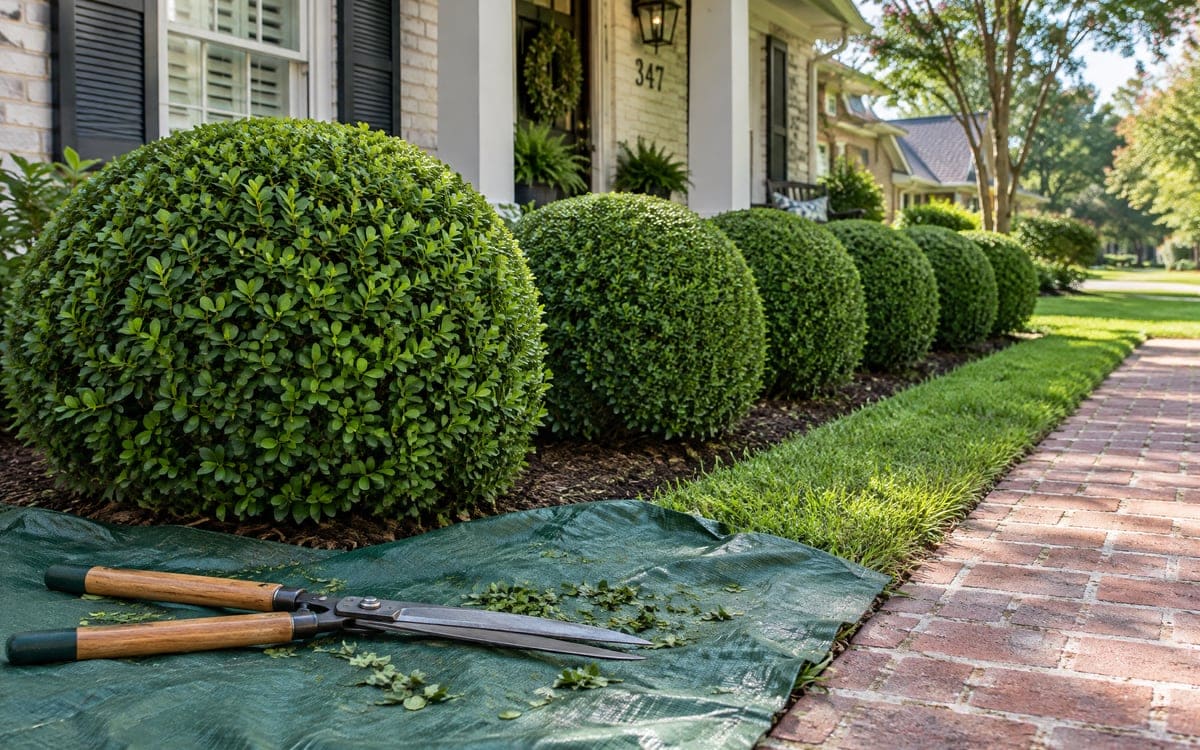
A row of five round boxwood balls shaped into even spheres along a mulched bed by a brick walk, with wood-handled hedge shears resting on a green tarp in front.

Hedge trimming in Baton Rouge: your questions

What month should you trim hedges here?

Different shrubs sit on different calendars. The short version: boxwood and ligustrum through the growing season, azaleas after the spring flowers fade, hollies after new growth hardens, Indian hawthorn after its spring bloom. The month depends on which shrub, and the hedge trimming calendar for Baton Rouge runs each one through the year.

How is the line drawn between hedge work and other work?

If the whole plant can be reached from the ground with both hands on the trimmer, it is hedge work. Anything taller than that, or near a wire, is past what our crew covers; on the call we ask about height and distance from any line so we know before anyone shows up.

Can an overgrown hedge be brought back?

Usually, yes, over more than one trim. On the first trim we take a careful amount and leave green on the branches so the shrub can keep breathing. The number of trims it takes depends on what the row looks like once the first one is done. A hedge brought back in one hard cut often does not come back at all.

What happens to the clippings?

Clippings land on the tarp and come off at the end of the visit. How the bags and bundles leave is settled when the job is priced. Nothing is swept into the gutter or the drain.

How often should hedges be trimmed?

Boxwood and ligustrum take more than one trim a year. Azaleas and Indian hawthorn usually hold shape with one trim after the bloom and a light touch later. Yaupon and dwarf hedges want more small trims than larger shrubs. For a bed with hedges and groundcover together, edges along the beds can be set at the same visit.

Do I need to be home?

No. If a gate is unlocked or a code works, and you have told us the shape and height you want on the first call, the trim can be handled without you there. Let us know about any dog so it can be kept inside while the crew works.

How is hedge trimming priced?

A few things set it: how long the row is, how tall the shrub stands, how thick the trim pieces will be, how long the hedge has gone untrimmed and how much there is to clear from the tarp. We land on a price for the row that is actually there, not a figure named off a photo. For what to ask a crew before you say yes, the hiring guide has the shortlist.

Call (225) 535-8165 and tell us the shrub, the row and how tall you want it to end up. If reaching the phone during the day is tough, the short form under the number sends your name over and we take it from there.

Ready for a freshly cut lawn?

Describe your yard to someone who mows, edges and trims for a living.

Call (225) 535-8165 Browse all services

Rather we call you?

Leave your name and number and we will call you back.

We use your number only to call you back. Privacy policy