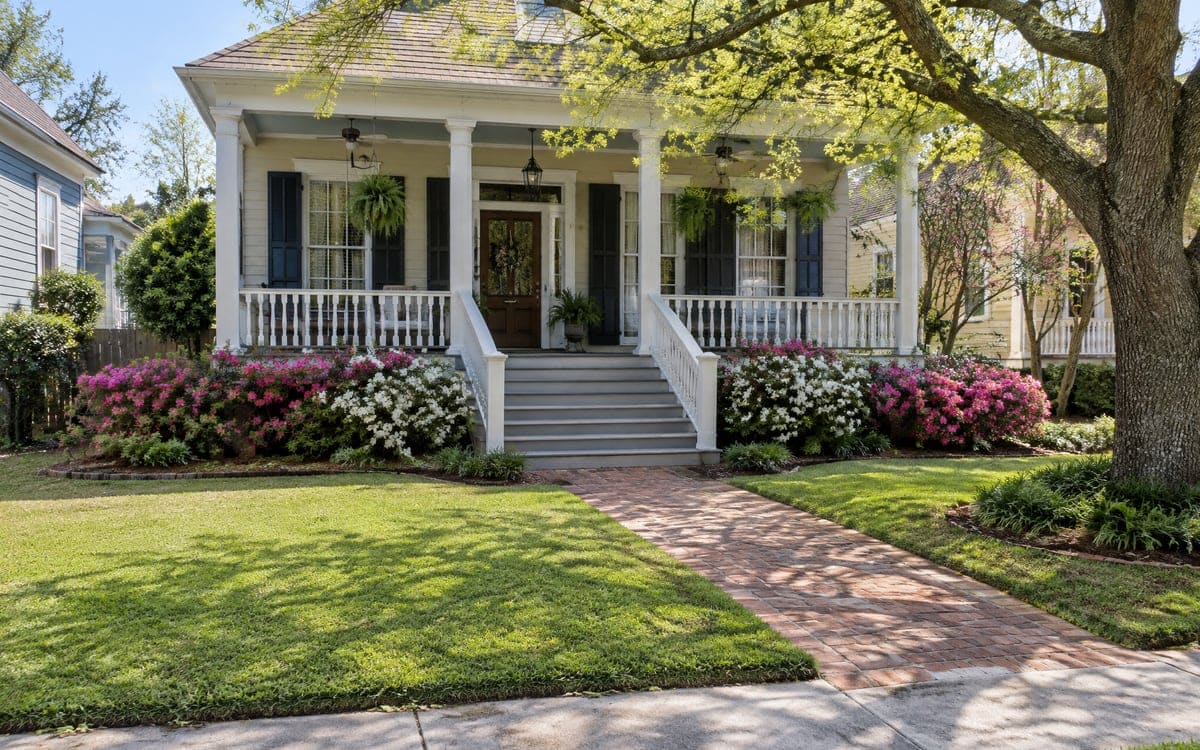
The season starts before spring does
The calendar says spring in late March. The lawn does not wait that long. Lawns in south Louisiana can start greening up in late February, and Baton Rouge has a long freeze-free season of about 276 days at the median with a median last freeze around February 25. The one-in-ten year still sees a freeze as late as March 19, so a yard with a tinge of green in February may lose some of that color to one more cold night. The first cut usually waits until the lawn is clearly growing and the yard is dry enough for a mower to work cleanly.
The mowing year for a warm-season lawn
How a warm-season lawn grows through the year, and what that means for how often it gets cut.
Late February
Lawns in south Louisiana can start to green up.
Spring and summer
Active growth from March on, with a cut about once a week. Summer heat speeds it up when there is enough moisture.
Fall
Growth slows, but regular cuts with sharp blades still hold the height.
November to February
Most lawns go dormant and mowing is generally not needed, though St. Augustine may never go fully dormant in a mild winter.
Sources: LSU AgCenter, From winter dormancy, lawns spring to life; LSU AgCenter, The One-Third Mowing Rule; LSU AgCenter, Follow best management practices when mowing lawn; LSU AgCenter, Fall and Winter Lawn Care.
Most yards call for the first real cut in March. Pick up sticks before the mower runs; a branch under the deck can send a rock or a stick at a window. If a cold snap is still in the forecast, the cut can wait a week.
Spring growth calls for a cut about every week
Once the grass is up, Louisiana lawns are mowed about once a week, or three to four times a month, during the active growing season. The warm months run March through October, when warm-season grass is in active growth. That is a long window, and weekly cuts are the simple way to stay on top of it.
Weekly works because of how grass responds to cutting. A standard rule of thumb is to mow before the grass reaches one and a half times the mower's cutting height. In April and May that threshold comes around on a weekly rhythm. Skip a week in heavy growth and the next mow takes off more blade than the lawn should lose at once, which thins the stand and makes the yard easier for weeds to colonize.
If you want the schedule handled from spring through fall without having to call every week, a weekly or every-other-week schedule is what that looks like.
Summer rain and heat push growth faster
May into August is the fast stretch. Louisiana's warm-season grasses grow faster and need to be mowed more frequently in the hot summer if moisture is adequate. When the summer rains stay on their usual schedule, growth tracks the heat. A yard that was fine on a weekly rhythm in April may want the shorter end of that in June.
A yard that got away during a rainy stretch is a different conversation. A lawn that is past the mower deck belongs with a lawn that got ahead of the mower rather than a routine visit. Taller grass needs a different first cut, in more than one pass.
Shade changes the picture too. Shaded grass tends to grow more slowly than grass in the open. The crew sets the height for the lawn and reads the growth from pass to pass.
Fast growers and slow growers keep different calendars
Not every warm-season lawn runs on the same rhythm. Fast growers such as bermudagrass may need mowing more often than slow growers such as zoysiagrass. Centipede is also on the slow end for most of the year.
| Month or stretch | What the grass is doing | What the mowing schedule looks like |
|---|---|---|
| Late February into March | South Louisiana lawns can start greening up; last freeze still possible | First cut when the lawn is clearly growing and dry enough to mow |
| March through October | Warm-season turf in active growth | Mowing on a regular rhythm, closer together in heat if moisture holds |
| June through August | Hot, wet months; growth tracks the heat and the storms | A weekly cut keeps each pass light; rainy weeks shift it |
| October into early November | Growth slowing but still steady | Less often than summer, still regular to hold the right height |
| Around November 26 | Median first freeze at the airport | The last routine cuts of the year ride that line |
| November into February | Turf dormant on the regional calendar | Mowing while dormant is generally not needed |
The target cutting height depends on the grass, which is the subject of grass cutting at the right height for your grass. A lawn cut at the right height for its grass can handle weekly growth without the stand getting ragged between cuts.
Fall growth drops but does not stop
October and November look like a drop-off, and they are. Fall lawns still need regular mowing to maintain proper height even as the cuts come less often than they did in July. The visits keep coming on a regular rhythm until the grass is clearly winding down for winter.
Edges and trimming also follow this pattern. The last few visits of the year still include edging and trimming with each cut because sidewalks and drives keep collecting runners even when the lawn in the middle is not asking for much.
A fall yard looks less vigorous than the summer yard did, which is part of the season. The right height held through October and November carries the lawn into dormancy as a well-covered stand rather than a thinned one. The schedule reads cleanest when the gap between visits grows week by week instead of all at once.
The first freeze ends most of the cutting
The median first freeze at the airport comes around November 26, with one year in ten seeing it by November 7. That date is the practical end of regular cutting for most warm-season yards here. One more mow before the freeze is common, and a mild late-November stretch may call for one after.
Most warm-season grass goes completely or partially dormant by mid to late November or December, with St. Augustine the exception that may not go fully dormant in a mild south Louisiana winter. A dormant tan Bermuda lawn is done for the year. A St. Augustine lawn that holds a dull green through December may want one more light cut if winter weeds start to tower over it, but it does not need a routine mow.
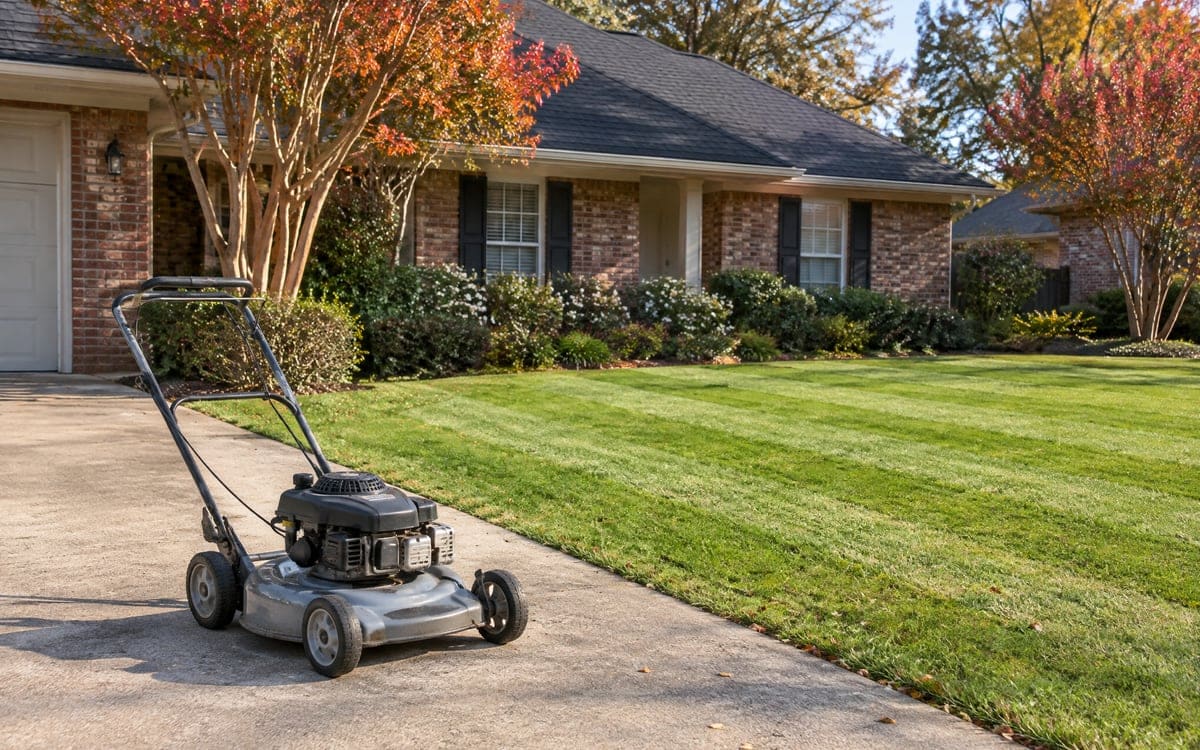
Dormant months need little or no mowing
December, January and most of February are the quiet months, with turfgrass dormant and mowing while turfgrass is dormant generally not necessary. A Baton Rouge winter is short enough that the lawn is not asleep for long, but during that stretch a routine mow does nothing useful for the grass.
Hedge work holds its own quiet window across those same weeks, and when to trim hedges walks through which plants want it then.
By late February the schedule starts over, with green-up timing lining up with the median last freeze. A yard that is clearly growing by the first week of March is ready for its first cut.
Rain days decide the week more than the calendar does
The one factor that bumps a schedule is weather. Baton Rouge averages about 114 days a year with measurable rain and about 19 days with an inch or more. That is roughly a wet day every three days on average, and summer storms tend to clump. A rainy week in June pushes a cut back a day or two, which usually puts the next cut back by the same amount.
LSU AgCenter's turf guidance is to mow turf when foliage is reasonably dry so the mower will work optimally. Wet grass clumps under the deck, tears instead of cutting cleanly, and leaves tracks on soft soil. The crew judges the yard on the day; a wet lawn is left alone and the cut moves to the next dry window.
A rainy run of days usually means the next cut takes off a little more growth than a dry week would, which is still fine as long as the lawn is not past the one-and-a-half line. On the days it is, that first cut is treated like a tall one and brought down in more than one pass rather than scalped in one.