What hand weeding a bed involves
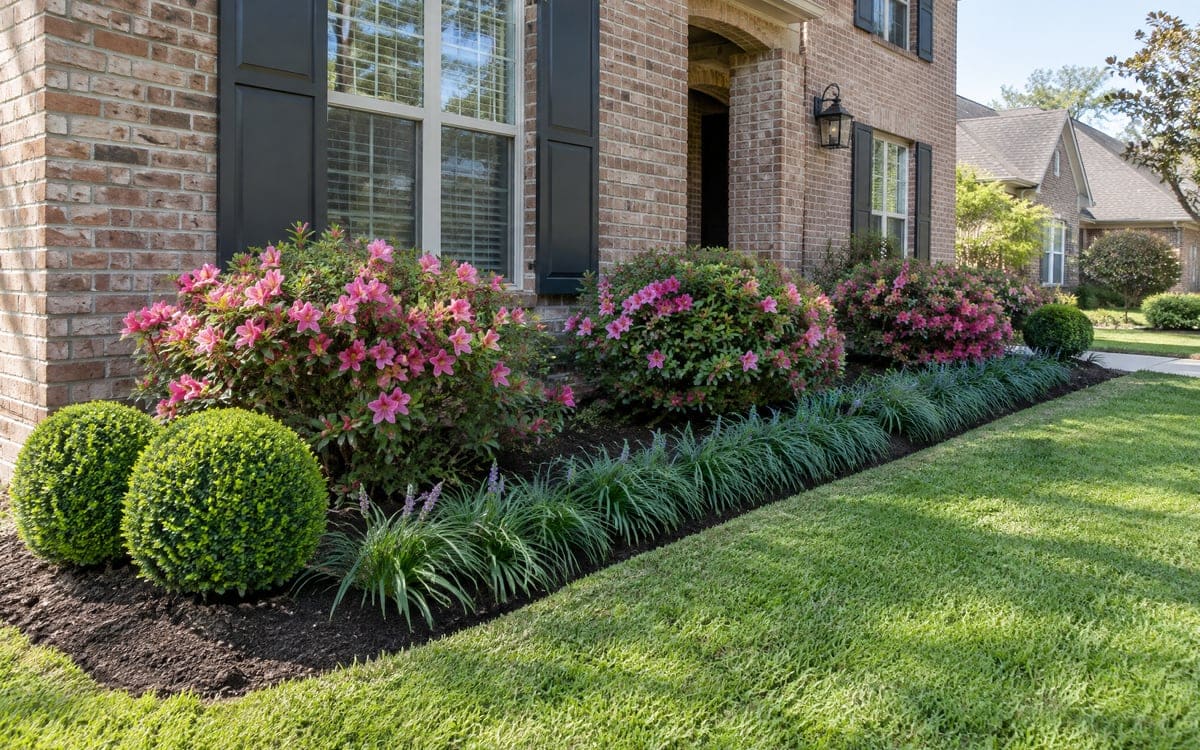
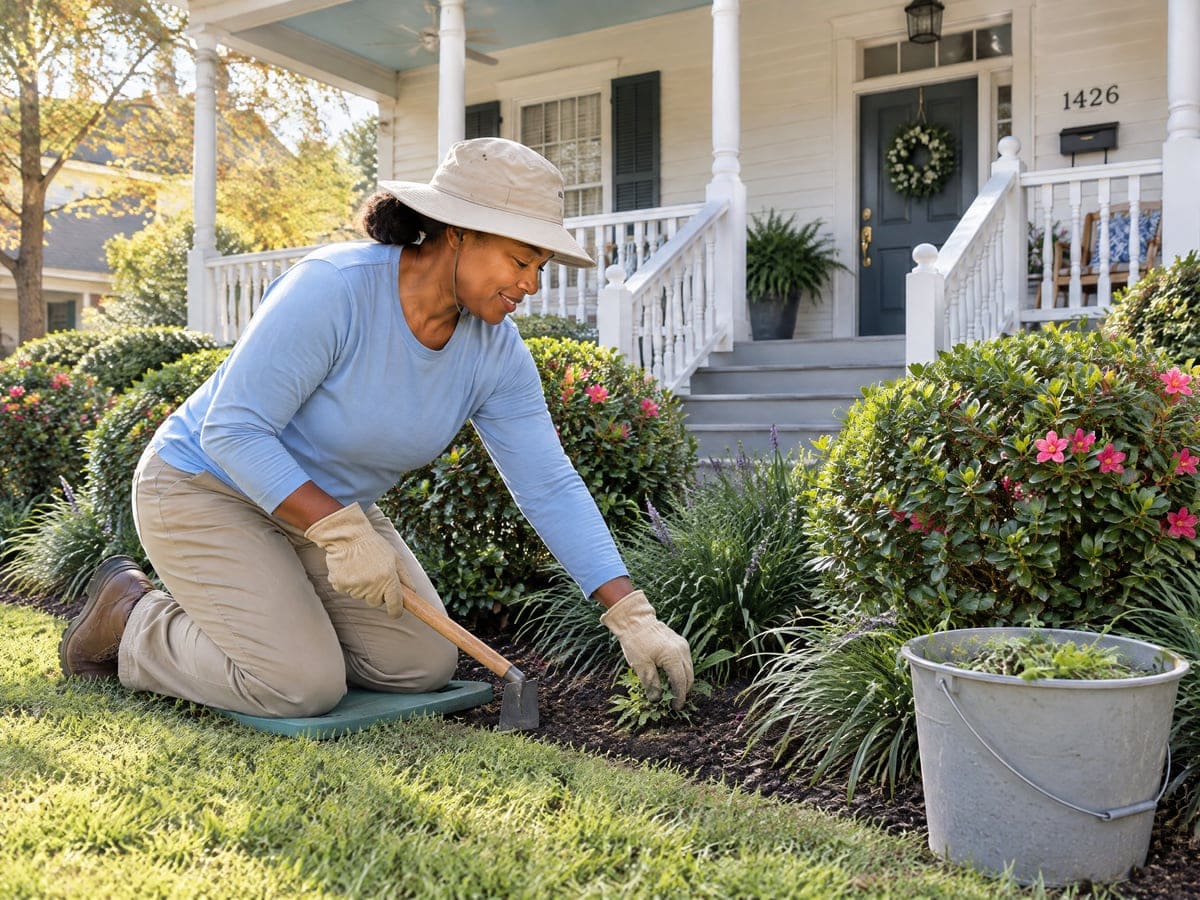
Hand weeding is slow and specific. A bed with azaleas and liriope is not the same job as a bed with a shrub row along the house, and both start the same way: on the ground, with a pair of gloves.
1. A look at the beds with you
We walk the beds and name what is planted so nothing comes out that you want to keep. A seedling you have been waiting on, a self-sower you like, a volunteer that showed up and you want to see what it does. The bed edge comes into this walk too, since a soft edge changes how we work in from the lawn.
2. A walk for fire ant mounds
Before anyone kneels in the bed, we walk the row for fire ant mounds.
Imported fire ants sting and build mounds in Louisiana yards, and no treatment rids a yard of them for good. We point out each mound, weed around it, and leave it alone. If a mound is in the way of a plant that needs weeding, we tell you and come back to that spot later.
3. Pulling by hand, roots and all
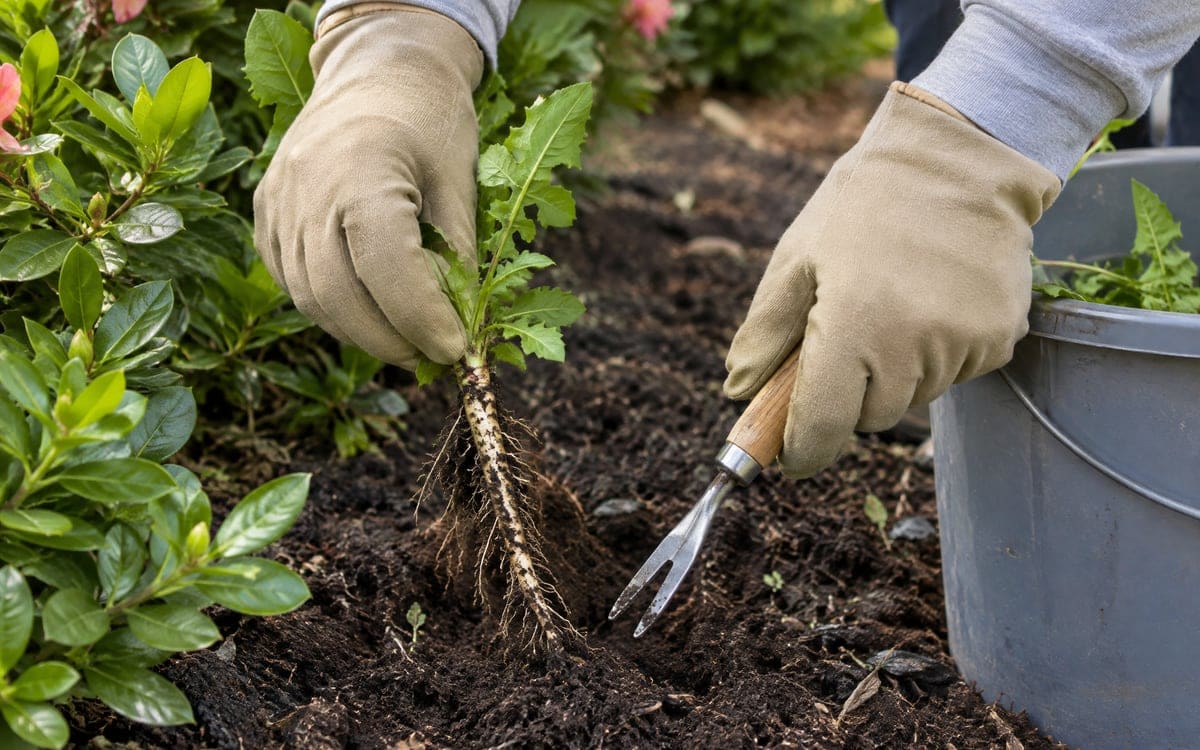
Pulling by hand means a bare hand or a gloved one on the top growth, close to the ground, and a steady pull straight up. A forked hand weeder lifts a tap root; a trowel loosens soil where a root has run deep. On a shallow weed the whole plant comes out in one piece; on a deep one we loosen first, then lift. The point is the root. A weed snapped off at the surface comes back.
4. Working when the soil lets go
Wet soil releases a root; dry soil breaks it. Moist beds let the whole plant come up, roots and all; on a hot August day with hard ground, we may do what we can and come back. The crew judges the beds on the day.
5. Weeds into the bucket
Pulled weeds go into a bucket, then into a bag. Nothing is left on the mulch to seed in again, and nothing is swept into the gutter or the street. A clean bed and a clean bed line matter together, so a clean edge along the bed can be added if the edge has gone soft.
6. A last look along the bed
We walk the bed with you if you are home. Spots we missed, roots that pulled short, a line we did not quite finish, these come out before we go.
| What you see in the bed | What it usually is | How hand weeding handles it |
|---|---|---|
| Low mats with small white flowers | Clover | Pulled by hand with a forked weeder, roots and all |
| A low, fine grass seeded through the bed | Annual bluegrass | Pulled before it seeds |
| Prickly rosettes in late winter | Lawn burweed | Pulled when the soil is moist |
| Low mats that keep coming back after a mow | Virginia buttonweed | Pulled from the beds and worked back from the bed line |
| Tall summer grasses in the mulch | A grass or a sedge | Pulled by hand with a forked weeder |
| A thick-rooted runner from the fence | A climbing vine | Pulled where we can reach, roots followed where the soil is loose |
Virginia buttonweed is the most troublesome lawn weed in Louisiana, partly because it grows low enough to survive mowing; a healthy lawn kept through regular mowing is the way to prevent or reduce it. In the beds, hand weeding handles it one plant at a time.
When hand weeding is the right fit
Hand weeding is a bed and small-patch job. A whole lawn thick with weeds is a different story; what thins the weeds there is a thick, well-mowed lawn kept at the right height for its grass.
When hand weeding is the right job
- Flower beds and shrub beds that have gotten away over a few weeks.
- A ground cover bed where new weeds are threading through the plants you want.
- A small patch at the edge of a walk or a drive that keeps coming back.
- A reset for beds that have not been touched for a season.
When another service fits better
- A lawn green with weeds in winter is a different story. A regular visit with the mower set correctly handles it over time.
- Beds under hedges that have gone shaggy need the shrubs in the bed too.
- The bed line itself: once the edge has gone, the edging service brings it back and makes future weeding faster.
On the call we ask how many beds, what is planted, how long since the last weeding and whether a dog will be in the yard. The answers point to the visit.
From the call to a clean bed
- The call. You tell us what the beds look like, what is planted, which beds matter most and whether gates and dogs come into it.
- The look at the beds. In person if you are home, or from what you tell us plus a check on arrival. We flag plants to leave and spots we want to come back to.
- The price and the go-ahead. The price is for the beds that are actually there. If you want to think about it, that is fine.
- The work and a last look. The pulling, the bag, the bed line checked, then a walk together if you are home.
For how a bed changes the picture on cost, what moves the price covers the pieces, and what to ask covers the questions worth putting to any crew.
A long warm season keeps weeds busy in Baton Rouge
Weed work here is not a one-season visit. Warm-season turf is in active growth from March through October, dormant from November through February. When the lawn goes dormant, weeds such as clover, lawn burweed and annual bluegrass keep going, so a bed visit in January can still find work.
Baton Rouge also averages about 114 days a year with measurable rain and about 19 days with an inch or more, and that water is what gets a weed up and out when we pull: moist bed soil releases a root cleanly, where dry soil snaps it.